
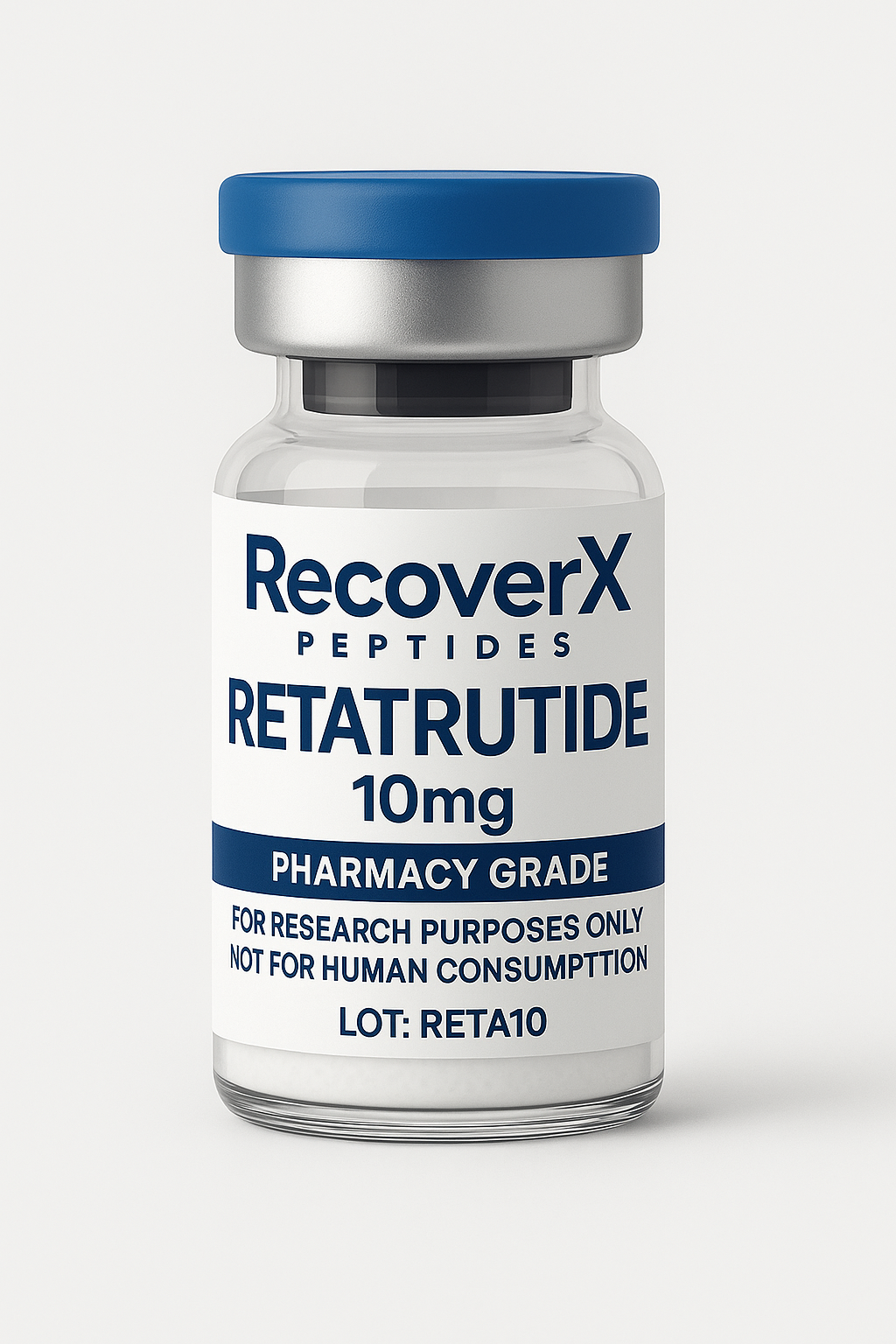

The Retatrutide peptide, a synthetic peptide, fascinates researchers with its innovative design. Scientists engineer it with 39 amino acids, targeting multiple hormone pathways. Consequently, it mimics GLP-1, GIP, and glucagon hormones. Moreover, it includes a C20 fatty diacid for enhanced stability. Thus, it captivates peptide science enthusiasts.
The peptide binds to GLP-1, GIP, and glucagon receptors, showing triple affinity. Furthermore, it resists quick breakdown in the body. As a result, scientists study the Retatrutide peptide’s chemical resilience. Additionally, its production involves precise chemical synthesis. Hence, researchers probe its manufacturing techniques.
Its creation by Eli Lilly marks a research breakthrough. Initially, scientists developed it in the late 2010s for experimental studies. Subsequently, its name reflects its multi-receptor targeting design. Moreover, it garners global laboratory interest. Therefore, it fuels cutting-edge biochemical experiments.
In research, the Retatrutide peptide circulates effectively in biological models. Furthermore, it maintains stability under physiological conditions. Consequently, scientists explore its pharmacokinetic behavior. Additionally, labs worldwide analyze its molecular structure. Thus, it drives progress in peptide research, sparking curiosity and encouraging deeper scientific inquiry.
- Appearance: Solid white powder in 3ml glass vial
- Chemical Formula: C223H343F3N46O70
- Molecular Weight: 4845.44 g/mol
- Storage: Store in a cool, dry place away from light, heat and moisture
- Synonyms: LY-3437943, NOP2Y096GV
- Sequence: YA1QGTFTSDYSIL2LDKK4AQA1AFIEYLLEGGPSSGAPPPS3
- Concentration: ≥98%
Be the first to review “RETATRUTIDE 10MG”
Related products





Reviews
There are no reviews yet.